


Champagne Pommery Introduces New Expressions of Its Classic Champagne To The US Market

by Andrew Chalk
Dedicated Champagne drinkers know that the defining feature between producers is ‘house style’. They vary from light and elegant to powerful and heavy. Buyers choose their producer partly on their house style. However, many drinkers like one style for one situation (for example, toasting a family event) and another style for another (for example, to accompany a veal chop at dinner).
Esteemed Champagne house, Champagne Pommery, stepped forward this week with its own solution to pairing Champagne with the occasion with the US release of its Apanage 1874 line, Champagne styles designed for food pairing. The term apanage means privilege or special right and refers to the 1874 date that Champagne Pommery introduced the first successful brut (dry) Champagne. Hard to believe that Champagne hitherto had been a sweet wine.
A tasting in Dallas was led by winemaker Baptiste Chazeaud.

Champagne Pommery Apanage 1874 Brut ($75- $100/750ml)

A blend of Chardonnay, Pinot Noir, and Pinot Meunier aged for around three and a half years.
The producer describes the nose as “Fresh, subtle, elegant, creamy, almost butter-like, with citrus fruits (pink grapefruits).” and the palate as “A wine held together by explosive creaminess. Hazelnuts, dried apricot and vanilla notes are dominated by light tobacco and shortbread.”
I found it complex and giving of different facets of itself for a long period in the mouth.
Champagne Pommery Apanage 1874 Blanc de Blancs ($75-$100/750ml)

A 100% Chardonnay wine. The grape blend would lead us to expect a subtle, refined and elegant wine.
The producer notes about the nose “With a remarkable elegance, the first nose reveals a spring freshness. Subtle floral notes of jasmine and acacia are harmoniously paired with delicate grades of linden. After this first impression of an incredible freshness, a large complexity reveals itself during which notes of citrus fruits and a creamy impression of frangipane express themselves alternately.” And the palate “The attack is open, without detour, as a sign of a very great assemblage. The elegance and freshness revealed on the nose can be found back on the palate. The heart of the tasting is of an exemplary righteousness. The aromas of citrus fruits and white fruits (fresh apple) take over. The balance of the final is perfectly revealing the subtle flavor of yellow grapefruit.”
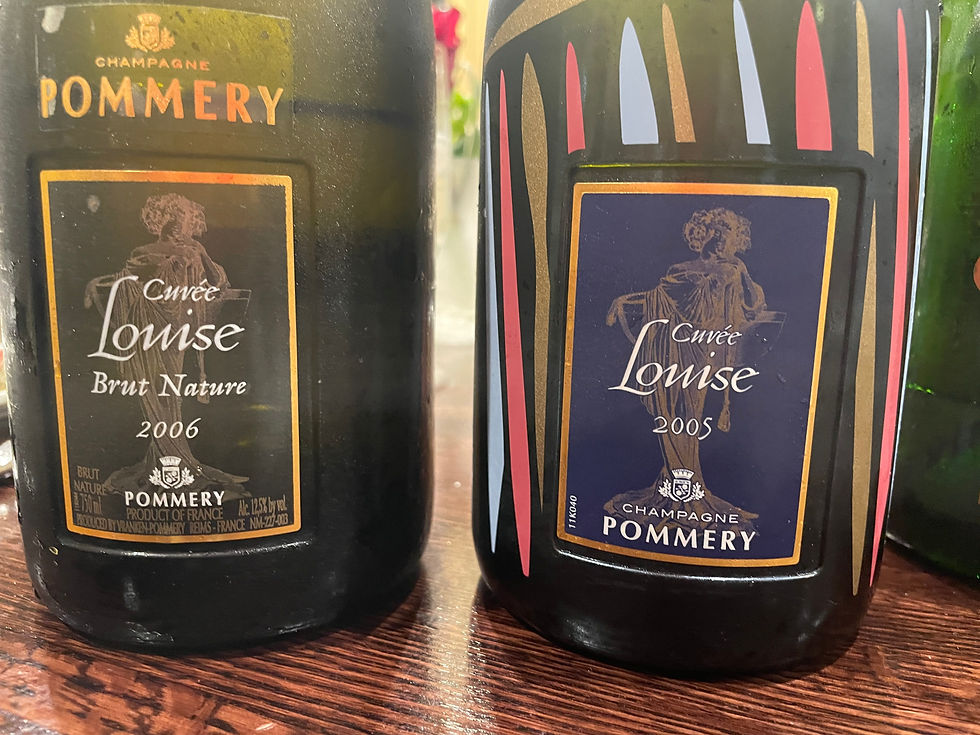
For completeness, the above wines were tasted alongside two expressions of vintage Pommery Champagne, known as the Cuvée Louise line in recognition of Madame Louise Pommery who took over the running of the estate in 1858 following the untimely death of her husband. The
Champagne Pommery also introduced the Champagne Pommery Apanage 1874 Rosé ($80-$120/750ml).
Cuvée Louise Brut Nature 2006 ($199-$250/750ml) and Cuvée Louise 2005 ($200/750ml). The former has no residual sugar added in the dosage, creating a wine of sternness and solid backbone that can pair with a wide range of food. The latter is a brut from a single vintage year, epitomizing the house style at its best. I usually prefer brut (a small sugar addition) to brut nature as it seems to make the wine richer. In this case I preferred the brut nature.
The tasting started with the leading Champagne Pommery wine Isee image at top of page), the Champagne Pommery Brut Royal ($50-$65/750ml). An ever-reliable mainstream Champagne for celebrations and events.
Champagne Pommery wines are widely available at fine wine stores and on the lists of fine restaurants.


Comments